Baby’s First Christmas Candy Cane Stripe
A Festive, Heartfelt Anchor for Your Holiday Collection
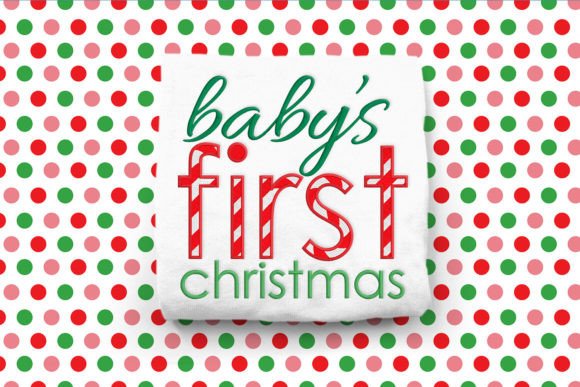
As an embroidery designer who’s built seasonal collections for over a decade, my first impression of Baby’s First Christmas Candy Cane Stripe is immediate and warm: it strikes that rare balance between nostalgic charm and clean, modern execution. The candy cane stripe framing adds rhythm and movement, while the phrase “baby’s first Christmas” lands with gentle sincerity—not cloying, not generic, but quietly emotional. It feels cozy and celebratory at once, with just enough decorative detail to read clearly at 3–4 inches wide, yet minimal enough to avoid visual clutter on small items. This isn’t a flashy, glitter-heavy motif—it’s a soft-spoken holiday heirloom in stitch form.
Where It Shines: Real-World Seasonal Product Applications
Baby’s First Christmas Candy Cane Stripe is built for versatility across your most popular holiday SKUs. On organic cotton sweatshirts or fleece baby blankets, the design reads beautifully at 3.5" wide—soft, legible, and gift-ready. For tote bags and kitchen towels, its horizontal layout flows naturally along seams or hems, especially when centered above a pocket or folded edge. Pillow covers and aprons benefit from its balanced proportions: no awkward stretching or distortion, even on medium-weight linen blends.
It’s especially strong for coordinated family sets—think matching toddler onesies, parent aprons, and infant bibs—all stitched with the same color palette. As an embroidered patch, it transfers cleanly to denim jackets or stocking hangers. And for Etsy sellers, this design thrives in bundled listings: pair it with a simple “Baby’s First Easter” or “First Birthday” companion file to boost average order value during November and December.
In craft fair displays, Baby’s First Christmas Candy Cane Stripe stands out because it tells a story instantly—no explanation needed. Social media previews perform well too: stitch close-ups on snowy-white towels or soft minky fabric generate strong saves and shares, especially when tagged #newmomgift or #christmasbaby.
Where to Use It Thoughtfully
This machine embroidery design excels—but it has thoughtful boundaries. Avoid using it below 2.75" wide on small hoop sizes (like 4x4") unless you’ve tested letter clarity; the lowercase “s” in “baby’s” and fine stripe edges can blur on dense fabrics. Thick terry cloth towels or heavy canvas require extra stabilizer support to prevent puckering around the stripe repeats.
On dark fabric, test thread colors thoroughly—especially reds and whites—since contrast affects perceived warmth and festivity. Metallic thread is not recommended here: the delicate stripe transitions and subtle curve of the text don’t hold metallic sheen consistently, risking a flat or uneven finish. Likewise, skip stretchy knits like jersey without proper cutaway stabilizer and reduced stitch density—the candy cane stripes may distort under tension.
Curved surfaces (like baseball caps or ornaments) demand careful hooping and possibly digitized adjustments—this file wasn’t built for 3D curvature. And if you’re planning high-wash-volume products (e.g., baby bibs or dish towels), confirm stitch density supports durability: overly dense fills trap moisture and wear faster.
Emotional & Commercial Impact During Peak Season
Holiday shoppers don’t just buy embroidery—they buy meaning. Baby’s First Christmas Candy Cane Stripe taps directly into milestone gifting, a top driver for handmade gift buyers. It signals care, tradition, and intentionality—qualities that increase perceived product value and justify premium pricing. Customers trust shops that offer cohesive, emotionally resonant seasonal embroidery files, and this design strengthens brand consistency across your Christmas lineup.
Visually, it’s instantly recognizable: the stripe motif + phrase combo creates strong shelf presence in mockups and printable promotional graphics. That recognition builds engagement—repeat buyers will scan your shop for similar tone and quality. For Etsy sellers, it supports strong SEO alignment with terms like “personalized baby Christmas gift” and “seasonal embroidery file,” especially when paired with realistic lifestyle photos (not just isolated stitch-outs).
Practical Designer Notes Before You Stitch
- Always test thread colors on both light and dark fabric swatches—red tones shift dramatically depending on base color and thread brand.
- Check stitch density before scaling: denser fills may overwhelm lightweight fabrics or cause stiffness on baby items.
- Confirm hoop size compatibility—this design was digitized for standard hoop ranges, but verify before batching production.
- Use appropriate stabilizer: tear-away for stable wovens, cutaway for knits or towels, and topping for textured fabrics like terry.
- Create realistic mockups—don’t rely on generic templates. Show it stitched on actual fabric types you sell.
- Review small details post-stitch: inspect the apostrophe in “baby’s” and stripe alignment—tiny inconsistencies stand out in close-up product photos.
- Plan matching color palettes across your collection: coordinate red/white threads with your other holiday embroidery files for unified bundles.
- Verify commercial licensing before selling finished seasonal products—this digital embroidery file requires clear rights for resale use.
Final Thought: A Timeless Seasonal Staple
Baby’s First Christmas Candy Cane Stripe isn’t just another holiday embroidery file—it’s a reliable, emotionally intelligent tool for small shop owners building meaningful connections during the busiest time of year. It works quietly but powerfully across apparel, home goods, and personalized gifts, supporting both speed-to-market and long-term brand resonance. When paired with thoughtful execution—tested threads, smart stabilizing, and authentic presentation—it becomes more than decoration. It becomes memory-making, stitch by thoughtful stitch.