Christmas Designs: A Designer’s Real-World Review
First Impressions: Charm Without Clutter
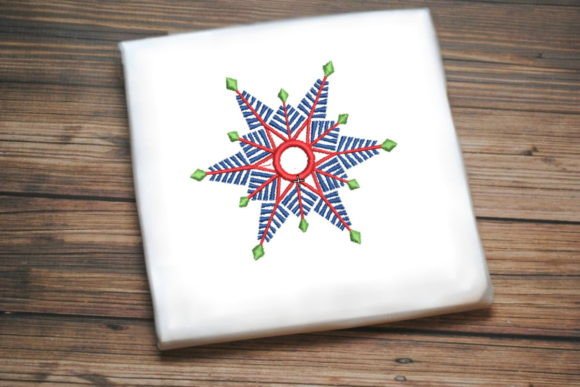
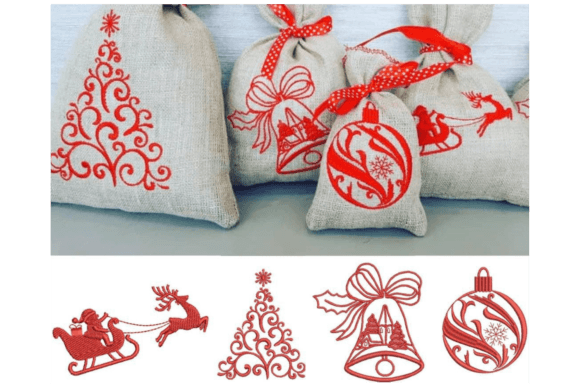
Opening Christmas Designs feels like flipping through a well-curated holiday sketchbook—warm, intentional, and quietly confident. There’s no visual shouting here. Instead, the motifs balance classic symbolism (think stylized holly, minimalist trees, soft snowflakes) with just enough originality to stand out on a crowded Etsy page or boutique shelf. The layout avoids overcrowding; negative space is respected, and stitch paths feel considered—not rushed or overly automated. As a designer who’s stitched hundreds of holiday files, I immediately sensed this wasn’t built for speed alone. It’s built for recognition: the kind where someone pauses mid-scroll because the shape feels familiar yet fresh.
Real Project Test: Embroidering a Linen Tote Bag for Holiday Pop-Ups
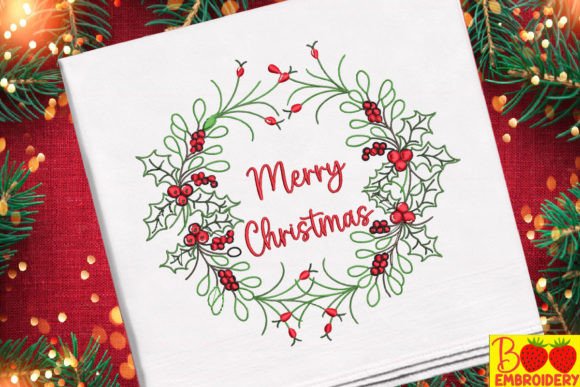
Last week, I prepped a small batch of natural linen tote bags for a local craft fair—intended as reusable gift carriers with subtle holiday flair. I chose one of the smaller motifs from Christmas Designs (a single wreath with delicate berry accents) and stitched it onto the lower right corner of each bag. Why this design? Because it held up beautifully at 3.2" wide—no pixelation in the leaf veins, no skipped satin stitches on the inner curve, and the fill stitch density stayed even across the grain of the fabric. Customers responded instantly: “Is that hand-stitched?” “Where did you get that font?” (It’s not lettering—it’s pure shape language.) That’s the quiet power of Christmas Designs: it reads as handmade, even when machine-stitched.
Where It Shines—and Where It Needs Thought
Christmas Designs excels on stable, medium-weight fabrics—cotton twill for aprons, fleece-backed sweatshirt fleece, and medium-weave tea towels. On a custom embroidered sweatshirt for a local café’s holiday staff, the motif retained crispness without stiffness. Same for baby embroidery: stitched onto organic cotton onesies using lightweight tear-away stabilizer, the design stayed soft and wash-safe after three cycles.
But—and this matters for craft business owners—Christmas Designs asks for intentionality on tricky surfaces:
- Caps and curved hats: Avoid the most intricate versions unless you’ve tested them on a cap frame. Some inner loops and fine stems compress unpredictably on domed surfaces.
- Thin or stretchy fabric: Running stitch outlines can waver on jersey or rayon blends. Add cutaway stabilizer *under* and *on top* (basting layer) for control.
- Dark fabric: The design relies on clean contrast. On navy or charcoal, test thread colors first—some lighter fills disappear unless you switch to ecru or off-white.
- Tiny lettering or micro-details: Not all variants include text, but if yours does, verify legibility at under 2.5". Small serif elements may blur on dense fill areas.
Design Integrity Meets Commercial Reality
As an Etsy seller and small shop product developer, I judge embroidery files not just by how they stitch—but by how they scale across my brand ecosystem. Christmas Designs holds up impressively:
- Visual appeal: Clean lines translate well into printable mockups—no heavy shadows or over-rendered gradients to fight with your branding.
- Customer trust: When buyers see consistent stitch quality across sweatshirts, pillow covers, and patches, they associate your shop with reliability—not just charm.
- Giftability: These aren’t novelty-only motifs. A satin-stitched ornament on a kitchen towel feels heirloom-adjacent. That elevates perceived value—and justifies higher pricing.
- Brand consistency: The cohesive style means mixing motifs across products (e.g., a snowflake on a tote + matching tree on a tea towel) reads as intentional curation, not random bundling.
Practical Notes Every Embroidery Designer Should Check
Before cutting fabric—or listing your next holiday collection—run these checks with Christmas Designs:
- Test on scrap fabric first, especially if using textured weaves (like burlap blends) or eco-fabrics with uneven absorbency.
- Review stitch density visually—not just numerically. Dense fills can pucker thin cotton; sparse running stitches may snag on brushed fleece.
- Confirm hoop size compatibility. If you’re limited to a 4x4 hoop, avoid layered applique versions unless the file includes simplified alternatives.
- Inspect corners and curves for stitch stacking. Tight turns should taper smoothly—not bunch or double-back.
- Try black-and-white mockups. Does the design retain personality without color? If yes, it’s versatile for monochrome branding or low-thread-count projects.
- Compare light vs. dark backgrounds using your actual thread palette—not default software swatches.
- Use appropriate stabilizer: Cutaway for knits, tear-away for stable wovens, and water-soluble film for delicate lace overlays.
- Verify licensing terms before selling finished items commercially—or reselling the digital embroidery file itself. The product description mentions it’s “perfect for accessories and clothes,” but confirm whether small business use is explicitly permitted.
Final Thought: Not Just Another Holiday File
Christmas Designs doesn’t try to be everything. It doesn’t cram 20 motifs into one pack or chase trends with metallic-heavy glitz. Instead, it offers restrained, stitch-smart design thinking—the kind that makes your embroidered patch look intentional, your personalized gift feel considered, and your small shop merchandise whisper “crafted” instead of “copied.” Whether you’re stitching a single baby onesie or prepping 50 tote bags for wholesale, this machine embroidery design earns its place in your design assets folder. It’s not flashy. It’s functional, flexible, and quietly memorable—the kind of holiday embroidery that returns to your cart year after year.