Deer and Flowers: A Thoughtful Embroidery Review
First Impressions: Graceful, Seasonal, and Surprisingly Versatile
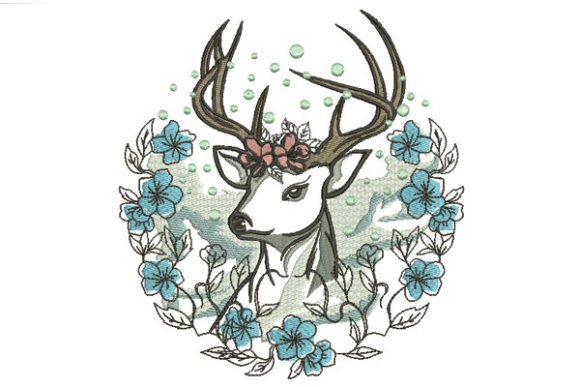
When I opened Deer and Flowers for the first time, I wasn’t expecting a design that straddles holiday warmth and year-round charm so effortlessly. It’s not overly literal—no red bows or snowflakes—but the gentle curve of the deer’s neck, the soft petal layering, and the organic spacing between stems give it quiet confidence. This isn’t a busy Christmas embroidery design shouting “festive!”; it whispers woodland elegance with just enough seasonal resonance to feel right in December—and equally at home on a spring baby blanket or a summer farmer’s market tote.
A Real Project Test: Custom Linen Tea Towels for a Boutique Holiday Launch
Last month, I used Deer and Flowers on a batch of heavyweight linen tea towels for a local gift shop’s holiday collection. The goal was handmade product appeal—not craft-fair rustic, but boutique-caliber: clean, intentional, and tactile. I stitched it centered on the lower third, using matte cotton thread in sage, terracotta, and charcoal. The result? Customers paused. Not just glanced. Paused. They ran fingers over the satin stitch antlers and lingered on the delicate fill-stitch blossoms. That kind of engagement tells me Deer and Flowers delivers visual weight without visual noise—a rare balance in machine embroidery design.
Where It Shines (and Where It Asks for Care)
Deer and Flowers excels on stable, medium-weight fabrics: denim aprons, cotton sweatshirts, twill tote bags, and brushed cotton pillow covers. Its layout is forgiving—moderate width, open negative space around key elements—so it breathes on apparel without distortion. On a curved surface like a structured cap? I’d recommend testing first: the deer’s head and flower cluster hold up well, but avoid placing the densest bloom area directly over the crown seam.
It’s also thoughtful for baby embroidery and nursery decor: no sharp angles, no tiny detached elements that could snag, and a rhythm that feels soothing rather than stimulating. As a holiday embroidery option, it avoids cliché while still reading as “special”—ideal for personalized gifts where recipients want meaning, not mass-produced cheer.
That said, proceed with care on:
- Thin or highly stretchy fabric—the fill stitch density needs solid support; lightweight jersey will pucker without cutaway stabilizer and careful hooping;
- Dark fabric with light thread—some inner petal details rely on subtle stitch direction shifts; test contrast on black or navy before committing;
- Small hoop sizes under 4×4 inches—the design’s grace comes from its scale; compressing it sacrifices flow and legibility in the stem lines;
- Frequent-wash items like kitchen towels or kids’ tees—reinforce with tear-away + light cutaway, and avoid overly dense satin areas near high-friction zones (e.g., towel hems).
Design Intelligence You Can Feel in the Finished Product
What makes Deer and Flowers stand out isn’t just prettiness—it’s design intelligence. The antler branches are spaced to avoid thread nesting. Petals use layered fill stitches instead of dense satin, reducing bulk and improving drape on apparel. There’s no unnecessary running stitch “scribbling” between elements—clean jump stitches mean less trimming and sharper presentation. That matters when you’re selling embroidered patches or custom sweatshirt embroidery: cleaner stitching reads as more professional, builds customer trust, and elevates perceived value—even on a $28 tote bag.
For Etsy sellers and small shop owners, this translates directly to better mockup realism. In printable mockups, Deer and Flowers holds up in both color and grayscale previews—unlike some designs that vanish on dark backgrounds or blur in low-res thumbnails. And because it’s not tied to one season’s palette, you can reuse the same digital embroidery file across multiple listings: holiday gift guide, spring nursery edit, or summer farmers’ market booth—all with consistent brand tone.
Practical Designer Notes Before You Stitch
Before adding Deer and Flowers to your next craft business project, here’s what I always do:
- Test on scrap fabric—especially if using textured weaves (like burlap blends) or performance knits;
- Check thread color contrast in natural light—not just screen preview—since floral tones shift dramatically on oatmeal vs. charcoal linen;
- Review stitch density in your embroidery software; if it’s over 18,000 stitches, consider simplifying one bloom layer for kids’ wear;
- Confirm hoop size compatibility—this design likely fits 5×7 comfortably, but verify before digitizing for multi-position runs;
- Inspect small details at 200% zoom: are petal tips crisp? Do antler tips taper cleanly? If not, minor cleanup may be needed;
- Test black-and-white mockups to ensure silhouette recognition—critical for logo-like use on patches or caps;
- Use appropriate stabilizer: medium cutaway for knits, tear-away for stable wovens, and fusible + tear-away for lightweight chambray;
- Verify licensing—if selling finished products or bundling the digital embroidery file, confirm commercial use rights are included.
Final Thought: A Design That Earns Its Place
Deer and Flowers isn’t just another holiday embroidery download. It’s a quietly confident design asset—one that supports your craftsmanship instead of competing with it. Whether you’re stitching personalized gifts, building an Etsy shop’s signature style, or creating small-batch merchandise for a local boutique, it adds warmth without clutter, elegance without stiffness, and seasonal relevance without expiration. It’s the kind of machine embroidery design that makes customers say, “I need to know who made this”—and that’s the highest compliment any designer or maker can earn.