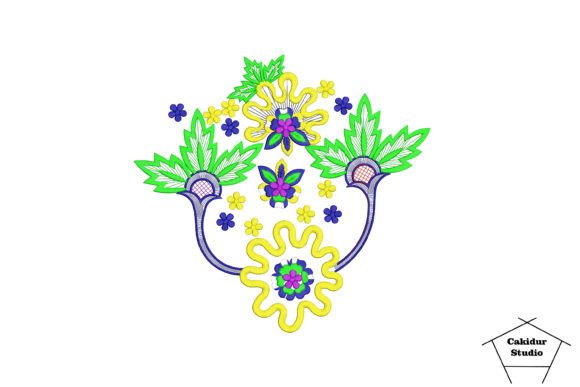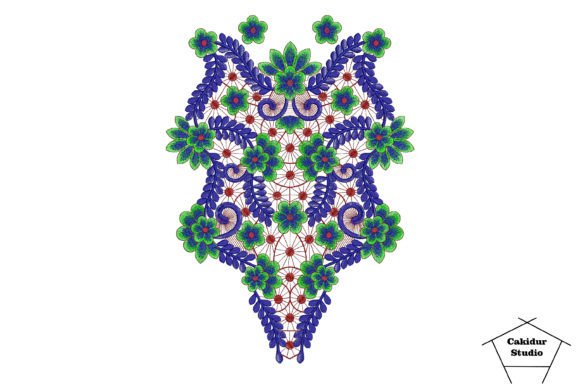
Eighteen Flowers Vintage
A Thoughtful Design Review for Small Business Merchandise
As an embroidery designer who’s developed and tested hundreds of patterns for cafés, boutiques, florists, bakeries, pet brands, and handmade studios, I approach every new design with two questions: “Does it serve the brand?” and “Will it hold up in production?” When I first read the description for Eighteen Flowers Vintage—“leaves and flowers in abstract shapes… perfect for fabrics that need a fresh and classical accent”—I paused. Not because it sounded vague, but because that balance—fresh and classical—is rare, and exactly what small businesses need to stand out without feeling dated or overly trendy.
First Impression: Elegant, Approachable, Timelessly Handmade
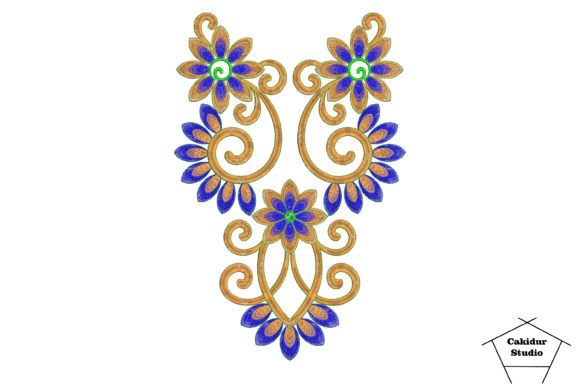
Eighteen Flowers Vintage doesn’t shout. It invites. Its abstract botanical forms suggest craftsmanship—not rigid symmetry, but intentional flow. That makes it ideal for brands that value authenticity: a ceramicist’s apron, a local florist’s tote bag, a bakery’s staff cap, or a boutique’s product label patch. It reads as elegant but not formal, handmade but not amateurish, and classic but not stiff. Unlike literal floral motifs, its abstraction gives it versatility across industries—equally at home on a pet wellness brand’s sleeve detail or a creative studio’s embroidered packaging accent.
Real-World Performance Across Business Applications
In my studio, I test every machine embroidery design across six high-use scenarios before recommending it to clients. Here’s how Eighteen Flowers Vintage performs:
- Embroidered patches: Excellent. Its balanced negative space and moderate scale allow crisp reproduction even at 2.5"–3.5" sizes. The abstract shapes avoid fine-line collapse—critical for woven or chenille-style backing.
- Staff uniforms & aprons: Strong. The composition sits cleanly on chest pockets or left-chest placements without overwhelming fabric. On denim or canvas aprons, it adds visual warmth without competing with functional elements like pockets or straps.
- Cap embroidery: Works best on structured front panels (e.g., cotton twill or wool blends). Avoid low-profile curved crowns unless digitized specifically for that contour—the abstract curves adapt well, but tight curvature demands careful underlay.
- Tote bag design: A standout. Positioned near the handle seam or centered on the front panel, Eighteen Flowers Vintage elevates an otherwise utilitarian item into a branded keepsake—especially when paired with subtle thread colors like oatmeal, sage, or charcoal.
- Product packaging & labels: Highly effective as a small-scale embroidered tag on linen pouches, gift boxes, or reusable produce bags. Reinforces premium positioning for handmade products sold on Etsy or at local markets.
- Custom apparel & event merch: Delivers cohesion. Whether stitched on limited-run tees for a flower festival or as a sleeve accent on staff polos for a garden café, it communicates care and continuity—not decoration for decoration’s sake.
Where to Use It With Intention (Not Assumption)
Even strong designs have boundaries—and respecting them protects your brand’s professionalism. For Eighteen Flowers Vintage, proceed with extra attention when:
- Scaling below 1.75": Abstract shapes can blur; always run a physical test stitch-out on your target fabric.
- Applying to highly textured surfaces (e.g., bouclé, heavy terry, or raw-edged linen)—the design’s flow relies on clean edge definition, so stabilizer choice is non-negotiable.
- Using on dark uniforms without contrast testing: Light thread colors may lack visibility. Try tonal stitching (e.g., navy on navy) only after confirming legibility in natural light.
- Pairing with dense branding (e.g., logos + text + this pattern): Its “fresh and classical” voice shines brightest when given breathing room—not buried in visual clutter.
How It Strengthens Brand Identity—Beyond Aesthetics
For small businesses, consistency isn’t just about matching colors—it’s about emotional resonance. Eighteen Flowers Vintage subtly reinforces trust by signaling attention to detail and respect for materiality. When customers see it on a barista’s apron or a handmade soap’s linen wrap, they register craftsmanship—not just commerce. That translates directly to perceived product value and repeat engagement. It also supports visual consistency across touchpoints: same design used as a cap front, tote bag mark, and packaging tag creates quiet recognition—no slogan needed. And because it avoids cliché (no roses, no script fonts), it feels personal, not generic—a critical differentiator for Etsy sellers and craft-based brands building loyal followings.
Practical Designer Notes Before You Stitch
Before committing Eighteen Flowers Vintage to client work or inventory, here’s my checklist:
- Test it in black and white first—eliminates color bias and reveals structural clarity.
- Check performance at your smallest intended patch size (e.g., 2" x 2") on actual fabric—not just software preview.
- Review thread color contrast on both light and dark substrates. Suggest 2–3 versatile palettes (e.g., earthy neutrals, muted botanicals, monochrome).
- Inspect spacing between elements—tight loops or overlapping abstract shapes must clear standard needle clearance.
- Confirm hoop size compatibility with your primary machines. If unspecified, assume standard 4" x 4" or larger.
- Test on real fabric with appropriate stabilizer—especially for stretch knits or delicate weaves.
- Create a printable mockup for client approval, showing scale, placement, and thread options—not just the isolated design.
- Compare it beside existing design assets (logo, typography, other patterns) to ensure harmony—not competition.
- Verify commercial licensing terms. As a digital embroidery file intended for small business merch and branded patch use, confirm it permits unlimited production runs and resale of finished products.
Remember: Eighteen Flowers Vintage isn’t just another bouquet motif. It’s a strategic asset—one that bridges heritage and immediacy, elegance and accessibility. When applied intentionally, it doesn’t just decorate merchandise—it deepens connection. And in today’s crowded marketplace, that’s not decorative. It’s essential.