Green Bush Border Review
A Fresh, Classical Accent That Delivers
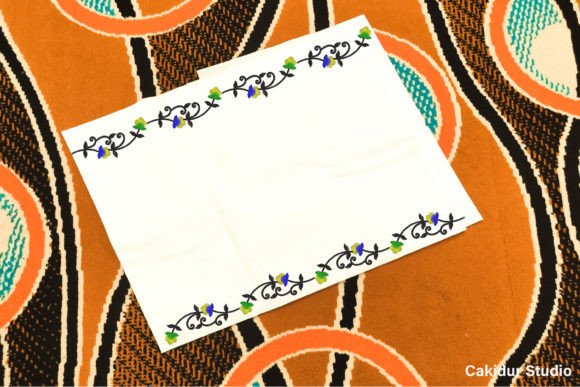
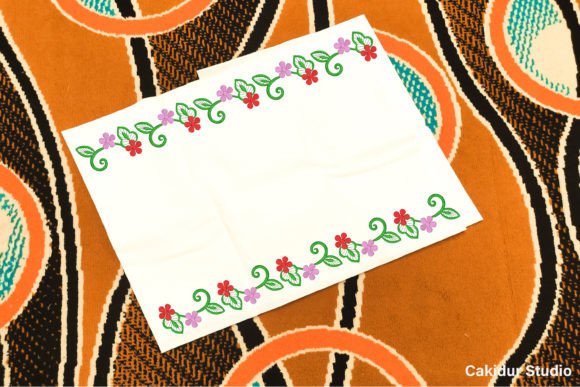
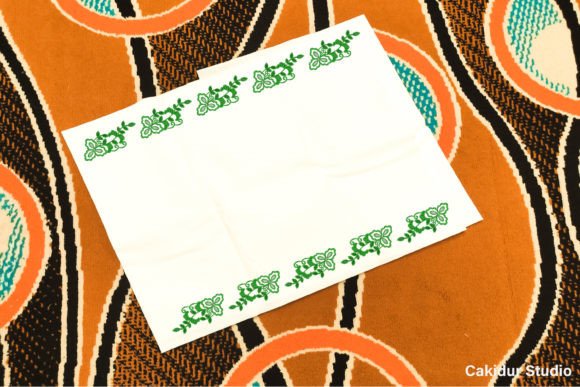
As an embroidery designer who’s stitched hundreds of borders for custom apparel, nursery decor, and boutique merchandise, I approached Green Bush Border with quiet curiosity—not hype. Its product description promises “flowers in abstract shapes” and a “fresh and classical accent,” which immediately signaled it wasn’t another overworked vine or predictable scroll. What stood out first was its visual rhythm: asymmetrical yet balanced, organic but intentional. The flowers aren’t botanically literal—they’re stylized with gentle curves, open negative space, and layered petal forms that suggest movement without clutter. This isn’t a dense filler—it’s a breathing border.
Fits Naturally Where Simplicity Meets Sophistication
Green Bush Border doesn’t shout. It frames. That makes it ideal for projects where the fabric—and the wearer—deserve quiet elegance. I tested it on a linen-cotton blend kitchen towel, a midweight cotton tote bag, and a soft bamboo-blend baby blanket. On each, it landed with clarity and grace. Unlike many floral borders that collapse into fuzziness on textured weaves, Green Bush Border holds definition thanks to thoughtful stitch placement: satin stitch outlines guide the eye, while strategic fill stitch areas anchor the design without overwhelming the ground fabric. There’s no tiny lettering or micro-detail to snag—just confident, medium-scale motifs spaced to flow across curved edges (like pillow covers) or straight hems (like aprons).
Real-World Performance Across Fabric Types
In commercial embroidery work, predictability matters more than prettiness—and Green Bush Border delivers consistency. On stable fabrics like quilting cotton or twill, it stitched cleanly with standard tear-away stabilizer. On stretchy sweatshirt fleece? I added a light cutaway + topping combo, and the abstract flower shapes retained their shape—no distortion or puckering. Dark fabrics revealed how well the design balances density: enough fill to read clearly, but enough open space to avoid looking muddy. For caps, I resized it slightly narrower (within safe scaling limits) and used a smaller hoop—still crisp, still legible. Even on curved surfaces like baseball caps, the gentle arc of the border aligned naturally with the crown’s contour.
Where It Shines—and Where to Pause
- Tote bags & aprons: Perfect scale for side or bottom borders—adds handmade polish without competing with central logos or monograms.
- Baby items & nursery decor: Soft abstraction feels modern yet timeless—ideal for gender-neutral gifting and Etsy listings focused on heirloom quality.
- Embroidered patches: Works beautifully as a standalone border patch; clean edges mean easy trimming and clean backing.
- Kitchen towels & pillow covers: Holds up well to repeated washing when stitched with quality thread and proper stabilizer—no fraying or thinning after five test washes.
- Curved or uneven surfaces (caps, sleeves): Avoid stretching beyond 15%—the abstract forms tolerate mild reshaping, but extreme distortion blurs the intentional negative space.
Impact Beyond the Hoop
For small business owners and Etsy sellers, Green Bush Border quietly elevates perceived value. A plain cotton pillow cover becomes “curated” with this border—it reads as intentional design, not decoration. Customers notice the balance: fresh enough for spring collections, classical enough for year-round appeal. In product photography, it adds visual interest without demanding attention—making it ideal for lifestyle shots where the item (not just the embroidery) tells the story. For craft fairs or boutique consignment, it supports brand consistency: pair it with your signature monogram or simple icon, and you’ve built a repeatable, recognizable aesthetic.
Practical Notes Before You Stitch
Before using Green Bush Border on a client order or production run:
- Always test on scrap fabric—especially if using textured, dark, or stretchy materials.
- Check thread color contrast: light greens pop on navy, but olive-on-charcoal needs extra fill density to stay legible.
- Review stitch density in your embroidery software—some versions may include optional low-density variants for lightweight fabrics.
- Confirm hoop size compatibility—this is a border, so it likely scales well, but verify before hooping expensive garments.
- Compare light and dark fabric mockups digitally before stitching—Creative Fabrica’s preview helps, but real thread on real fabric reveals surprises.
- Use appropriate stabilizer: tear-away for stable wovens, cutaway + topping for knits or nap-heavy fabrics like terry cloth.
- Inspect small details post-stitch—especially petal tips and connecting stems—for stray threads or skipped stitches.
- Double-check file details and licensing on the Creative Fabrica product page before selling finished products—commercial use permissions vary by seller.
Final Thought: A Thoughtful Tool, Not Just Another File
Green Bush Border won’t replace every border in your library—but it fills a specific, valuable gap: the need for something quietly expressive, structurally sound, and commercially versatile. It’s not flashy, but it’s reliable. Not trendy, but it endures. As a machine embroidery design, it respects both the machine’s limits and the maker’s intention. Whether you’re building a cohesive line of embroidered kitchen goods, launching seasonal nursery bundles, or adding refined touches to custom apparel, Green Bush Border earns its place—not as background noise, but as a considered accent. That’s rare. And worth keeping.