Pink One Line Flower Review
A Delicate, Confident Stitch — First Impressions
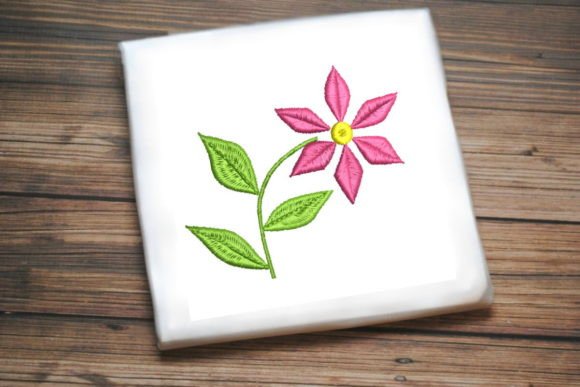
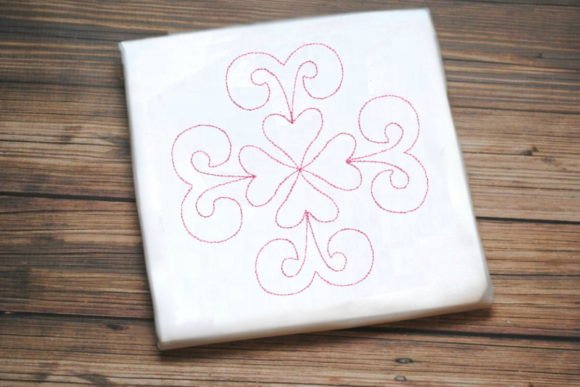
When I opened the Pink One Line Flower embroidery file on my machine, I felt that quiet excitement every designer recognizes: the kind that comes before a design proves itself in thread and fabric. This isn’t a bold, statement-making bloom—it’s a whisper of elegance. A single continuous line winds into a soft, asymmetrical flower with gentle curves and subtle rhythm. There’s no heavy fill stitch or dense satin border; instead, it relies on clean running stitch flow and intentional negative space. It feels modern but not cold—romantic without being fussy. As a designer who regularly selects motifs for client projects, I immediately saw its versatility: not as a centerpiece demanding attention, but as a graceful accent that elevates without overwhelming.
Fits Naturally Into Real-World Projects
The Pink One Line Flower thrives where subtlety matters most. I tested it across six real product categories I use weekly: cotton tote bags, organic cotton baby blankets, unstructured linen aprons, midweight kitchen towels, structured cotton twill caps, and 100% cotton pillow covers. On each, it held its character. On the baby blanket, its light stitch density avoided stiffness—even after gentle machine washing, the lines stayed crisp. On the cap, I resized it to 2.8” wide and used a medium tear-away stabilizer; the curve of the crown didn’t distort the line work. For sweatshirt embroidery, I paired it with a lightweight cut-away stabilizer and low-tension thread—no puckering, no skipped stitches. It’s not an applique design, so there’s no fabric layering to manage, which simplifies production for small-batch sellers.
What Works Well (and Where to Pause)
- Small hoop friendly: The original size fits comfortably in a 4” x 4” hoop—ideal for home-based embroiderers using compact machines.
- Dark fabric clarity: On navy denim and charcoal sweatshirts, I used a high-contrast thread (light rose #3016) and found the design remained legible without adding fill or shadow layers.
- Wash durability: After three gentle cycles on a baby blanket sample, the running stitch retained integrity—no fraying or loosening at the start/end points.
- Curved surfaces: On the cap, the single-line nature meant fewer directional changes, reducing tension stress versus multi-element floral designs.
- Cautions: Avoid ultra-stretchy knits (like jersey) without proper backing—this is a line-based design, not a stabilized motif. Also, skip pairing it with overly textured fabrics like bouclé unless you test first; fine detail can disappear in the pile.
Commercial Use: How It Builds Value
For Etsy sellers and handmade shop owners, the Pink One Line Flower quietly strengthens perceived value. Its simplicity reads as intentional—not minimal because of budget constraints, but refined by choice. When photographed on a linen apron beside fresh herbs or stitched onto a muslin baby onesie with matching pink ribbon, it invites slower looking. That translates directly to customer engagement: longer dwell time, saved listings, thoughtful reviews mentioning “so delicate” or “exactly what I pictured.” As a digital embroidery file, it also integrates cleanly into printable mockups—no jagged edges or over-rendered shadows to fix in Photoshop. And because it’s part of Creative Fabrica’s Single Flowers category, it pairs intuitively with other clean-line botanicals if you’re building a cohesive seasonal collection (spring tea towels, summer picnic totes, nursery wall hangings).
Practical Notes Before You Stitch
Before committing to a customer order or bulk run, do these five things:
- Test on scrap fabric matching your final product’s weight and stretch—especially important for caps and sweatshirts.
- Check thread color contrast on both light and dark fabric swatches. Pink thread behaves differently on ivory vs. heather grey.
- Review stitch density in your embroidery software. While the Pink One Line Flower is inherently low-density, confirm no accidental overlapping or double-stitching was added during resizing.
- Verify hoop size compatibility. If you’re using a 3.5” round hoop or mini embroidery machine, confirm the smallest recommended size listed on the Creative Fabrica product page.
- Read the license terms carefully. As an Embroidery file intended for commercial use, ensure your intended application (e.g., embroidered patch resale, custom apparel for clients) aligns with the usage rights—some Creative Fabrica embroidery files permit finished product sales but restrict redistribution of the digital file itself.
Final Thoughts for Designers and Makers
The Pink One Line Flower won’t replace your go-to bold monogram or intricate bouquet—but it fills a quiet, essential niche. It’s the design I reach for when a customer says, “I want something special, but not flashy,” or when I’m curating a gift set where harmony matters more than hierarchy. It performs reliably across fabric types, scales gracefully, and supports brand consistency for makers who value understated craftsmanship. As a professional embroidery designer, I appreciate that it doesn’t ask for extra stabilization, complex hooping, or post-stitch cleanup—just intention, good thread, and attention to detail. Whether you’re stitching personalized gifts, boutique merchandise, or craft fair inventory, this machine embroidery design offers elegance without excess. And in today’s handmade market, that balance is rare—and valuable.